
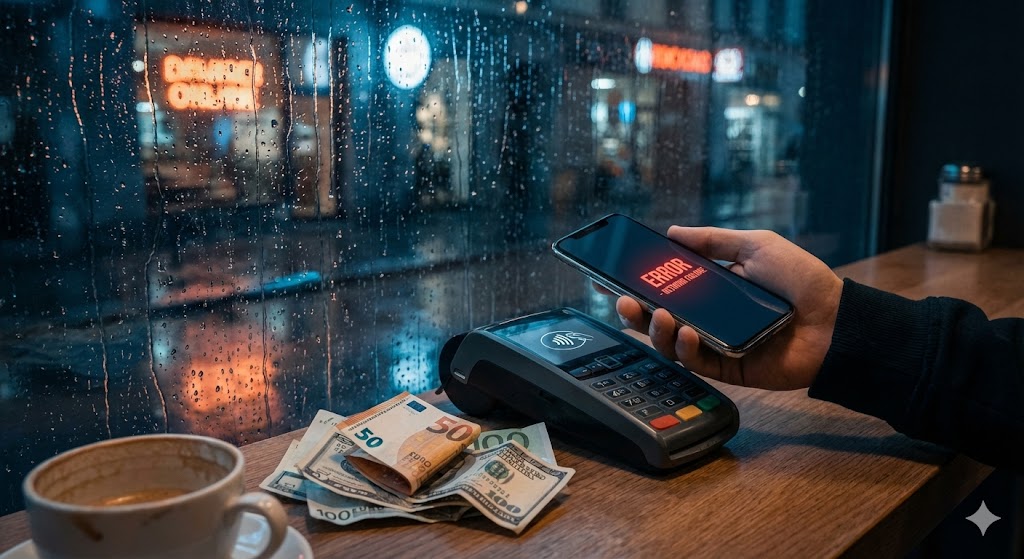
I tried to buy a coffee yesterday with a $20 bill, and the barista looked at me like I had handed her a stone tablet. “Sorry, card only,” she said.
This isn’t just about convenience anymore. In 2026, we are sleepwalking into a fully cashless economy, and while the banks love it, I’m starting to get worried. And you should be too.
I’m not a luddite. I use Apple Pay. I like not carrying a bulky wallet. But there is a massive difference between “choosing” digital and being “forced” into it. Here is the reality of what happens when cash disappears—and it’s not just about privacy.
1. The “Invisible Tax” on Every Transaction
When you pay with cash, a $5 coffee costs the merchant $5. When you pay with a card, Visa or Mastercard takes a cut (usually 2-3%).
For years, businesses ate that cost. Now? They are passing it to you. Have you noticed the “3.5% Non-Cash Adjustment” fee popping up on restaurant checks lately? That is the new normal. In a cashless world, everything you buy automatically costs 3% more. That is a direct transfer of wealth from your pocket to the payment processors.
2. Budgeting is Impossible When Money Isn’t Real
There is a psychological friction to handing over physical cash. You feel the loss. When you tap a phone or a watch, you feel nothing.
Behavioral economists have known this for decades: people spend significantly more—up to 100% more—when using digital payments compared to cash. If you are wondering why your savings account feels lighter this year, it might be because your money has become invisible.
3. The System Is Fragile
We rely entirely on the grid now. Two months ago, a major cloud provider had a 4-hour outage. I watched people at the grocery store abandon full carts of food because the card readers were down.
Cash is the ultimate backup system. It works when the power is out. It works when the internet is down. Removing it from the economy isn’t “modernization”—it’s creating a single point of failure for our entire daily lives.
My Take
I’m not saying we should go back to trading gold coins. But we need to be careful about cheering for the death of cash. Convenience is great, but resilience is better. I’m keeping a stash of bills in my safe, and frankly, I think you should too.
Related Articles You Might Find Useful
- The Unseen Bill: Mastering Legal Liability to Protect Corporate Wealth
- The Costly Nexus: Data Breach Securities Class Action Settlements and Corporate Accountability
- High-Stakes Digital Infiltration: Unpacking Legal Liability in State-Sponsored Cyber Espionage
See Our Latest Coverage
See Our Latest Coverage
See Our Latest Coverage
See Our Latest Coverage
See Our Latest Coverage
See Our Latest Coverage
See Our Latest Coverage
See Our Latest Coverage
See Our Latest Coverage
See Our Latest Coverage
See Our Latest Coverage
- The High Stakes of Advisory Liability: Protecting Insurance Agents from Investment Advice Litigation
See Our Latest Coverage
See Our Latest Coverage
See Our Latest Coverage
See Our Latest Coverage
See Our Latest Coverage
See Our Latest Coverage
See Our Latest Coverage
See Our Latest Coverage
See Our Latest Coverage
See Our Latest Coverage
See Our Latest Coverage
See Our Latest Coverage
See Our Latest Coverage
See Our Latest Coverage
See Our Latest Coverage
See Our Latest Coverage
See Our Latest Coverage
See Our Latest Coverage
See Our Latest Coverage
See Our Latest Coverage
See Our Latest Coverage
See Our Latest Coverage
See Our Latest Coverage
See Our Latest Coverage
See Our Latest Coverage
See Our Latest Coverage
See Our Latest Coverage
See Our Latest Coverage
See Our Latest Coverage
See Our Latest Coverage
See Our Latest Coverage
See Our Latest Coverage
See Our Latest Coverage
See Our Latest Coverage
See Our Latest Coverage
See Our Latest Coverage
See Our Latest Coverage
See Our Latest Coverage
See Our Latest Coverage
See Our Latest Coverage
See Our Latest Coverage
- The Actuarial Imperative: How Insurer Credit Ratings Shape Premium Valuations and Policyholder Costs

Nice post. I learn something totally new and challenging on websites